6 trendy kitchen accessories for 2015 & beyond

french press
Our core product lines focus on the latest and greatest in sinks, showers, tubs, faucets, toilets and all other plumbing related goodies, but this doesn’t mean we’re not interested in everything else that goes into creating the ultimate kitchen or bath experience.

In this post we’re going to look at a host of hot kitchen gadgets you won’t want to live without.

After all, the kitchen is the focal point of the modern home, and the time you spend there ought to be fun, right?

1. The best peeler you’ll ever own for under 10 bucks

You’ve already got a peeler but we guarantee it pales in comparison to the Trio by Prepara.

With separate blades for different types of fruits and vegetables you’ll be able to quickly and easily prepare skinless versions of foods you never thought possible.

Ever tried peeling a tomato? What a disaster.

Not with the Trio.

2. Another no-brainer improvement on an old school kitchen tool

Joseph Joseph’s square colander is awesome. So awesome, in fact, that you’ll never know how poorly engineered your old strainer was until you try this one.

The pioneering design offers several attractive features:

  • Balanced design prevents colander from tipping or falling over.
  • Extra-quick draining.
  • More accurate pouring means less mess.
  • Square contour makes for efficient storage.

3. Loose leaf extraordinaire

Some kitchen gadgets look cool but function poorly. Others look cool and work like a charm.

Tea lovers can’t rave enough about La Cafetaire’s innovative Tea Swizzle and now you can brew up a cup of your favorite loose leaf tea with less mess and a built-in stirrer.

4. A summertime must

Remember those rusty old stem removers your grandmother used to haul out for strawberry season?

Well, they worked – but not as well as the Chef’n Strawberry Huller by Williams & Sonoma.

Not only is this gadget fast and effective, but its gorgeous design is worth displaying as an aesthetic addition to your kitchen. You’ll leave your Chef’n Strawberry Huller out on the counter just to make your friends take notice and ask what it is.

5. Cut calories but not flavor

A fresh salad can quickly turn into a high calorie “treat” if you smother your lettuce with delicious, but fatty, salad dressing. Even a dripping of olive oil and balsamic vinegar isn’t the healthiest option.

Enter the Oil Mister at Sur la table.

Infuse your salads with just enough herb flavored oil to tantalize your taste buds without turning diet food into junk food.

6. An old trend coming back in a big way

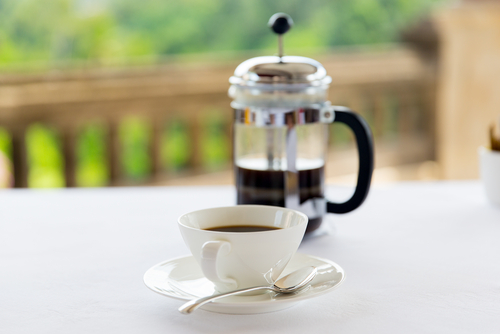
It’s no secret that drinking top-quality coffee has been in style ever since double-latte with no fat soy entered the modern vernacular – but it’s shocking to find how many homeowners invest in the top beans on the market only to toss them into a traditional drip coffee maker.

To get with the program pick up a French press.

It’s chic. It’s sophisticated. But most importantly the French press will brew you the best tasting cup of coffee you’ve ever had.
Posted in Uncategorized | Leave a comment

10 killer bathroom design concepts you’ve never heard of

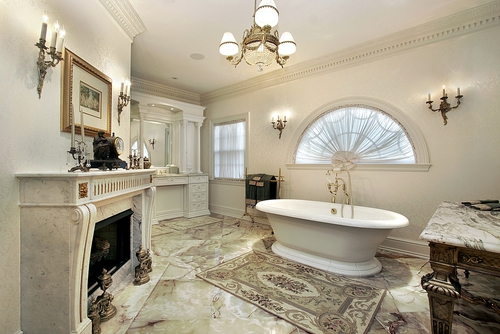
bathroom with fireplaceThere’s no middle ground when it comes to designing a bathroom renovation. Either you keep it safe (and there’s nothing wrong with that) or you get daring and go bold.

Let’s look at ten off-the-wall ideas that could take your quirky bath to the next level—if you’re willing to take a risk!

1. Employ flooring as the feature

Most bathroom designers tend to draw newcomers’ eyes to one of two places: the sink/faucet and vanity/mirror or a stunning tub/shower.

But what if your bathroom is “blah” and you don’t have the dough to shell out for a wall-to-wall makeover?

Rip up the flooring and lay broad, stylish, audacious tiles.

2. Cascading creepers

Adding plant life is a surefire method for doubling down on serenity. Go the extra mile and scrap the pots for a vertical garden in your bathroom.

3. Who needs walls?

Have you ever wished the master bath in your home was more Master, with a capital M?

If you’re brave enough, consider opening your under-sized en suite out into the bedroom. Sure, you’ll want to keep a barrier around the toilet and depending on your modesty level, perhaps the shower, too, but if you want to be on the cutting edge an open-plan bathroom will get you there.

4. An extended living space

Traditionally bathrooms exude a completely different design aesthetic from the rest of the house. But does it have to be this way? Not in 2015, it doesn’t.

Forget about blues and yellows, sailboats and seashells, and design your bathroom with the same motif that runs through the rest of your home.

5. A room with a view

Don’t worry so much about the neighbors looking in. Doubling or even tripling the size of your bathroom window is a great way to create a lot more space without adding a single square foot.

6. Patchwork tile work

Scrap the checkerboard and buy a collection of hand-painted picture tiles to give your shower a museum-quality appeal.

Don’t over-do it, though. While it’s OK to go asymmetrical with your tile work, do temper the theme with say 60% solid tiles in a single color. The gentle backdrop will make your artistic tiles stand out even more.

Multi-sized tiles can be more challenging to paste together smoothly but they work greatly to enhance the effect.

7. A desk and chair?

Sounds crazy, but it isn’t.

Nowadays more people are viewing their bathroom space as the only true at-home escape from a hectic life. Adding non-traditional furniture expands the list of things you can “do” in there.

Now, we’re not talking about a full scale workstation, just a comfy place to sit down and have a think. Another idea, of course, is a poofy chair or cozy love seat.

8. Plank walls

Many homeowners mistakenly believe wood just doesn’t belong in the bathroom, but a plank wall (or multiple walls), particularly in a cold climate, works to create a warm sensation as if your entire bathroom were built inside of a sauna.

9. Designer shower curtain and rod

If you’re not familiar with the present day selection of shower curtains you really do need to get acquainted. It’s no longer a world of “glass door or bust” out there.

10. Going all-in

What about a gas fireplace?

Yes, we said it.

Let that visual sink in a little bit if you have the wall space. You’ve got to admit it sounds pretty darn luxurious!

Posted in Uncategorized | Leave a comment

A simple guide to getting your bathroom lighting right

bathroom lightingWhen it comes to interior lighting, bathrooms are often overlooked. Homeowners tend to spend a lot of time planning out lighting for kitchens and living rooms while failing to give any love to the bathroom.

Bathroom lighting really does matter. It eases your daily shift from asleep to awake, escorts you through morning grooming routines and helps you unwind after a rough day at the office.

In this article we’ll help you to get yours right.

Work in layers

The biggest mistake frugal bath designers make is attempting to light the entire room with a single fixture. Designers recommend separate fixtures for each of the three major light components which ought to be considered for the bathroom.

Task, ambient and accent each represent one layer of the lighting experience.

See what you’re doing

In the context of the bathroom, task lighting refers to the vanity, where you do your morning grooming, and the shower.

A well-lit mirror is one that does not create shadows on your head and face. We avoid this problem by using vertical or sconce lighting both to the left and right of the mirror installed at eye level. Only in cases of very wide mirrors is an overhead fixture recommended.

In the event overhead lighting must be used, steer clear of ceiling-mounted fixtures and instead go with a horizontal bar placed 75 to 80 inches above the floor. Do not install “warm” bulbs for vanity lighting. Daylight bulbs with a minimum of 75 watts of power will best illuminate your full face.

Additional lighting may or may not be required in the shower depending on your layout. Often times a strong overhead fixture may be sufficient if the shower enclosure is created with glass doors, but be prepared to install a recessed lamp with glass lens should the area feel dark.

Don’t hide that first light switch

Most bathrooms include at least one central ceiling-mount light which can be turned on from just inside the door. The primary purpose of this fixture is to create ambient lighting—just enough light to move about the room safely.

Properly lighting your important “task” areas frees up more leeway with your ambient fixture. As long as your vanity is well covered, feel free to use a crystal chandelier or stunning antique lamp for your ambient light—but be sure the circuit runs to an easily accessible switch near the entrance. It’s never a good idea to ask visitors to the bathroom to step inside and find the switch in full darkness.

Get groovy and artistic

Accent lighting is all about creating a warm, inviting space.

Fairy lights, LED candles, and recessed spotlights can illuminate your bathroom and turn it into a work of art. Accent lights need not focus on any function other than creating a space that is as relaxing as it is rejuvenating. Today’s bathroom is an escape from a hectic world. Get creative with things that twinkle to top off the ultimate bathroom experience.

Posted in Uncategorized | Leave a comment

5 reasons to include a dedicated shower in bath design

bath-shower comboHomeowners have long since utilized larger than average bathroom floor plans to install expansive vanities, his and her sinks or luxurious over-sized bathtubs. And all of these bathroom upgrades are fabulous additions to your home.

But recently there’s been a shift in trends as more designers are using this space to take the big “either/or” question out of the equation. Instead of choosing between a tub, shower or combination of the two, schematics are drawn out to make room for both: A relaxing “bath only” tub and a separate, dedicated shower enclosure.

If you’ve got the square feet to spare, here are 5 reasons why a dedicated shower makes a wonderful addition to your bath design.

1. Practicality

Mornings are busy and hectic enough as it is. With both a tub and shower, there will be no more waiting when you and your spouse are in a hurry and need to get ready for work.

The only drawback is that it’s a whole lot more difficult to drag yourself out of a cozy warm bubble bath and make your way to the office!

2. Convenience and relaxation

Deciding between a bathtub and a shower is perhaps the most nerve-racking issue homeowners stress over when contemplating bathroom renovation design. Both choices offer a series of advantages so it’s difficult to know which set of pros and cons is right for you.

But who says you can’t have it all?

A dedicated shower provides the convenience of quick and easy bathing when you’re in a rush while allowing access to the tub on days when you’ve got the time to truly unwind.

3. Resale value

Are you looking for a way to add wow factor to your home? Dedicated showers are still a relatively new concept so they tend to make an impressive impact on prospective buyers visiting your property.

It’s a well-known fact that most home sales are made in the bathroom and the kitchen. A dedicated shower gets you half way there!

4. Beauty and aesthetics

Bath/shower combos just simply aren’t as stylish as stand-alone tub models such as Kohler’s Iron Works Historic, Vintage or Birthday Bath.

Installing a separate shower affords you absolute freedom in choosing the tub model of your dreams. There will be no need to be concerned with how well the tub works with a shower attachment. By focusing on form over function the tub can truly serve as the centerpiece of the room.

5. Your dream shower

When shopping for showerheads to be used in conjunction with a bathtub, options are severely limited. With a dedicated shower enclosure, the sky’s the limit.

Craft the complete luxury shower experience with Delta’s Multi-Setting H2Okinetic In2ition two-in-one showerhead & handshower combo. Add further delights with body sprays and wall jets.

There’s no longer a reason why your dream shower must come at the expense of a bathtub. Adding a dedicated shower to your bathroom renovation plans gives you the best of both worlds.

Posted in Uncategorized | Leave a comment

Hot off the press: fresh kitchen design trends for 2015

open kitchenBefore breaking out the checkbook and kick starting the shopping frenzy for your kitchen renovation project, it’s a good idea to stop, take a deep breath and find out what design ideas are trending for 2015.

After all, you’d hate to be out-of-date before the paint dries!

From floor plans to cabinets, fixtures and beyond, here’s what’s hot in today’s kitchen makeover.

Open-plan is here to stay

Over the past two decades, the idea of integrating the kitchen with other living spaces has been steadily rising. No longer is the chef of the house meant to be stowed away under lock and key.

Few new builds feature enclosed kitchen floor plans. The more exposed our kitchens get, the more designers tend to view the kitchen/living room as one space as opposed to two separate rooms sharing an imaginary wall.

So while the concept of an open-plan kitchen is hardly new, the notion that kitchen design elements ought to harmonize with adjoining rooms is.

When thinking about kitchen cupboards, countertops, flooring, lighting and color schemes you really need to consider how each of these pieces fit into the overall motif of the family room or other adjacent spaces. It’s no longer advisable to create a clear-cut division between the kitchen and the rest of your home.

Blond is beautiful

The 2000s brought us a love for simplicity in kitchen cabinet design, and affection for unassuming, clean white cupboards remains in 2015. But oak is coming back in a big, big way—and today’s designers are realizing that many of the most stunning kitchen ensembles are those that mix a blend of contemporary and traditional styles.

In the past deep hues were more popular when shopping for solid wood cabinets. Nowadays blonder tones are hitting center stage and white oak has replaced red in terms of demand.

Mixing wood tones is also more prevalent, and colored varnish is often employed to give older cabinets an up-to-the-minute facelift for pennies on the dollar compared to a gut and replace.

Forget about stainless

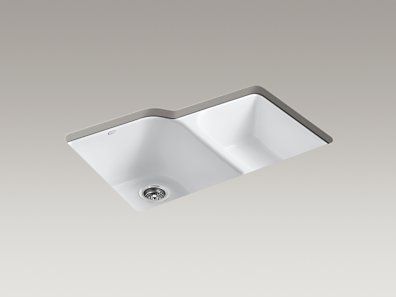
We’ve got nothing against the wide variety of stunning stainless steel sinks on the market today – but if you want your fabulous new brass or copper faucet to really pop, a throwback white or muted beige sink is exactly what you’re after.

Consider a Kohler Enamel Cast Undermount Executive Chef™ if your new faucet is modern in design:

And go with Apron-Front with bridge styled faucets or other antique designs:

Oil-rubbed bronze and warm metal tones

There’s no question that stainless steel and chrome still have a place for creating a clean, chic, professional look, but today’s warm, inviting kitchens feature deep, engaging fixtures with darker, more muted finishes.

Oil-rubbed bronze might be the hottest finish of the year, but not every design aesthetic can handle such a dark tone, particularly if you’re only doing a partial remodel. A nice middle ground between gloss and dense is brass or copper. These metals are both warm enough to create an impact yet bright enough to hold universal appeal.

Posted in Uncategorized | Leave a comment

10 ideas for blending exposed pipe in with your bath design

pipesIn older homes it’s not uncommon to see exposed piping rearing its ugly head in the bathroom. Sometimes it’s “mostly” hidden under the sink, but in extreme cases pipes can run down the walls and be a real eyesore.

If you don’t want to tear into the walls and re-plumb the entire room, here are 10 clever ideas for concealing exposed pipes.

1. Build around them

If the bulk of the pipes you’d like to cover up are underneath the sink, often times the best solution is to build a custom vanity. Even if you’re not a DIY-er, hiring a carpenter to put a solution together for you will still be a lot cheaper than re-doing the plumbing.

2. Bust out your sewing machine

An inexpensive alternative to a custom cabinet is to install a simple frame and stitch together a skirt to cover the area below the sink. One advantage of this tactic is that the sky’s the limit in terms of patterns and textures available at your local fabric store.

A simpler way to complete this project is to use Velcro or high-quality fabric tape to attach skirting directly to the sink.

3. Paint those pipes

There are two trains of thought when it comes to painting your exposed pipes: blend or accentuate.

The most common tactic is to try and match the pipe color to the color of the wall, but this doesn’t always yield the best results, especially with brick, wallpaper or irregular wall coverings.

Sometimes you’re better off painting pipes with a contrasting color to convert them into an accent as opposed to an eyesore. A popular approach is to purchase metallic paint to give your pipes a retro feel.

4. Wrap them with rope

Wrapping rope around exposed pipes can give your room a nautical flair. Complete the look with other seaworthy accents such as shells and maritime artwork.

5. Tape them

Electrical tape comes in a wide variety of colors these days. Don’t be afraid to mix and match colors for a funky and eclectic look. You can even change up the color scheme to match the holidays.

6. Convert pipes into a faux wreath

Twist pipes with artificial foliage to give your bathroom an au naturale feel. Plastic or silk flowers and leaves are inexpensive and easy to work with. Look for the type with wire stems to easily bend your faux flora around pipes. Artificial ivy is a good choice for this technique.

7. Add style with scarves

Wrapping pipes in fabric or silky scarves is a great way to go shabby-chic!

8. Complement them with ribbons and bows

Instead of trying to wrap every inch of your pipes, simply paint them in a neutral color and then accentuate every foot or two with a decorative bow. Spiral velvety ribbon barber-shop style between bows to complete the effect.

9. Use a cover-up

Depending on the size and location of your pipes it might be possible to build a simple 3-sided wood box to cover up the pipes. Depending on availability in your area, wide chutes of bamboo, cut in half lengthwise and hollowed out, can conceal pipes perfectly and give your bathroom a one-of-a-kind aesthetic.

Purchase additional bamboo accessories to meld the design together. With bamboo you can either go Asian or tropical.

10. Think in partials

Instead of trying to make the pipe disappear completely, cover up where you can and don’t worry about it where you can’t. Hang large art prints in deep boxed frames where pipes lurk at eye level and purchase oversized baskets to make plumbing less conspicuous without stressing over hiding every inch.

With this technique the pipe leads your eyes from feature to feature, highlighting design elements and fading the pipe into the background.

Posted in Uncategorized | Leave a comment

How to make the most of your bath time

bath and wineIt’s Friday night, you’ve got the house to yourself and you’ve just finished up a horrendous week at work. It’s time to hit the tub and we’ve got the ultimate step-by-step guide to help you get the most out of bath time.

The prep work

Taking a few minutes to tidy up the bathroom works wonders for helping to create a relaxing ambiance. If your bathroom is located in a colder part of the house it’s also a good idea to turn the heater on 15 minutes before you’re ready to undress and slip into the tub.

Optional preparations include:

  • Lay out your nightwear so you can slide into comfy clothing immediately after finishing your bath. An extra fluffy bath towel also goes a long way towards creating luxury and a soft pillow is perfect for resting your head and neck.
  • Gather together everything you’ll need so you don’t have to get out once you’re in the water and relaxed. Whether it’s a glass of wine or a good book, make sure everything you need is within arm’s reach of the tub before you get in.
  • Consider taking a quick shower first to clean off. If you are planning on taking a long bath you may not want to soak in dirty water.

Settling on a theme

From cocoa to lavender to pomegranate, vanilla and beyond, bath products come in every scent imaginable. Instead of throwing together a hodgepodge of fragrances that may not go together, try to synchronize your products to be all the same or at the very least highly compatible.

Deciding on a specific theme will also help transport you away to a different place. Go warm and cozy with chocolate and coffee or whisk yourself away to the tropics with a combination of coconut and pineapple.

Creating the mood

Setting up a portable stereo to play relaxing music is the perfect strategy for shutting off the outside world. A copious amount of candles craft a sensation of romance while allowing you to turn off harsh overhead lighting for further relaxation.

Delectable snacks

If you’re planning on soaking your cares away for more than an hour you might want to put together a fun snack tray of cheese, crackers and your favorite fruits. There’s nothing quite like the taste of an ice cold strawberry from the comfort of a warm bath.

Get the water just right

Take the time to monitor water temperature while drawing your bath. While it might be tempting to turn the water on and go do other things while the tub is filling, you don’t want the water to be too hot or too cold.

Bathwater that is too hot can be painful or cause dizziness. Bathwater that isn’t hot enough will soon lose its relaxing qualities and force an early end to your bath time.

When you’ve got the temperature just right, add bath salts, essential oils or essences, then undress and slide into the water.

The after-bath

Just before you’re ready to get out, wash yourself off with a soft washcloth to remove excess oils and other bath products. Once dry apply a moisturizing cream to your entire body.

Now that you’re nice and relaxed, brew up a warm cup of herbal tea.

Oh, and don’t forget to lock the door! Your bath time is the ultimate “Do not disturb” moment.

Posted in Uncategorized | Leave a comment

6 reasons to bring back the bathtub

bathtubThere’s nothing quite like coming home from a long day at the office and soaking away your troubles in a piping hot bubble bath. But somewhere along the way many Americans fell out of love with the bathtub.

Now the bathtub’s coming back—and in a big way.

If your home is currently tub-less, here are 6 reasons to consider including a bathtub in your next bathroom renovation.

1. Increased home value

A survey conducted by major renovation contractor NAHB found that 81% of all prospective home buyers would prefer a full bath on the main level. More than half of the respondents stated that the lack of a bathtub would be a deal-breaker.

The National Association of Realtors reports that homes that don’t feature at least one bathtub suffer from a negative impact on resale value.

2. Health benefits

A good hot bath does more than simply combat stress. Baths have been proven to reduce cramps or tension headaches and improve muscle elasticity and skeletal alignment. Additional benefits include increased blood circulation, toxin removal via perspiration, healthier skin and lymph system stimulation for a stronger immune system.

Opting for a bath over a shower can actually reduce your chances of catching a cold.

3. The perfect escape

Taking the time to relax and take your mind off anxieties and worries will produce enormous psychological benefits. Reading a good book while in the tub further enables your thoughts to wander away from financial and emotional stresses to clear your head.

Bath time can provide a true escape from your hectic life – particularly with a glass of your favorite wine!

4. Multi-purpose practicality

Bathing small children or pets is much easier and far less messy when done in the tub. Even if you don’t have plans to put your house on the market any time soon, it’s important to remember that young families will almost never purchase a home that does not feature at least one bathtub.

5. Romance

We won’t get into too many details here but whether you’re bathing alone or with company, a spacious bathtub creates a far more enticing ambience for setting up candles and pouring essential oils and fragrances into the water.

There’s a reason baths are known to be a natural mood-booster!

6. A better night’s sleep

A nice hot soak will relax your muscles and help you unwind, but what you might not know is that there’s a scientific reason why it’s so much easier to get to sleep right after you hop out of the bath.

The process of having your body temperature raised and then subsequently lowered causes your brain to release melatonin, the hormone used by our bodies to induce sleep. This natural sleep aid helps you fall asleep faster and reach REM more quickly, which translates into a more restful slumber—and a better night’s sleep means more energy, happier mornings and an all-around better mood.

Posted in Uncategorized | Leave a comment

Tips for financing a kitchen or bath makeover

piggy bankIt’s no secret that crafting the kitchen or bathroom of your dreams will cost a pretty penny. The good news is that if it’s done properly, your investment will last as long as you own your home, and increase your property value to boot.

But what are your options when you’re ready to take the plunge and don’t have tens of thousands of dollars sitting idly in your checking account?

Financing your renovation is a perfectly intelligent move if you cross your t’s and dot your i’s. Here are a few pointers to help the loan process go as smoothly as possible.

Budget first, design later

Prior to even thinking about financing, determine a realistic number for how much you can afford to spend. Once you’ve got this number, work backwards to allocate that money in the most efficient fashion.

It’s a mistake to start designing your ideal kitchen or bath before calculating the cost of recreating your vision. Start with your budget and then fill in the pieces from there.

There are two reasons this is a smart move:

  1. By setting your maximum budget up front at an appropriate level for your income you greatly increase the likelihood of having your loan approved.
  2. Sticking to a strict budget helps you get more creative. Perhaps those old cabinets would be okay with a facelift if it means $4,000 is freed up to spend on truly luxurious faucets and accessories.

When you’ve determined your budget and you’re ready to start, here are some of the financing options available:

Cashing out equity

The most common method for financing a renovation when “saving up cash” simply isn’t an option is to tap into the equity of your home. Most banks will loan up to 85% of your equity via a line of credit.

The advantage of a Home Equity Line of Credit is that the bank couldn’t care less what you do with the money. If the equity is there and you choose to take it, the bank will approve your loan as long as you can prove solvency to make the monthly payment.

A line of credit is great because you can pay down the loan whenever you’d like and take more out if need be. You only have to pull the amount you require and so interest is calculated solely on this total.

The disadvantage of a line of credit versus cash-out refinancing is that interest rates on home equity loans are higher versus a traditional mortgage.

Cash-out refinancing is an alternative method for pulling out equity where you refinance your entire mortgage while rolling in additional monies to the loan. Say you owe $150,000 on a $300,000 home. You can refinance at $200,000 and receive a check at signing for the difference. In this case you must define an exact amount to borrow and will pay interest on this full amount for the life of your loan.

It’s important to remember that refinancing resets your mortgage from scratch and that there are additional costs associated with closing the loan. In many cases a lower interest rate is not sufficient to cover these additional costs and so a cash-out refinance can cost more in the long run versus a home equity loan.

Spending the equity you’ve earned on improving your home is a smart idea but be sure to discuss the two “equity out” options in full detail with your lender to ensure you take the shrewdest course of action.

Retirement fund loans

Many 401K or IRA plans have provisions that allow participants to borrow against their own portfolios in certain scenarios. Check with your retirement plan administrator to see if home renovation loans are permitted under your plan.

The beauty of these types of loans is that the interest is often paid back into your own account. In essence you pull assets out of your fund to reinvest by loaning them to yourself. Talk with HR or your account executive for details on your situation.

Personal line of credit

Those without sufficient equity in their home to reach the 85% rule can still look into a traditional line of credit.

Loan approval will be based off your income and interest rates will be higher since this type of lending is not generally backed with collateral.

Renovation refinance

In cases where remodeling plans will drastically increase the value of your home it’s possible for the bank to refinance your mortgage at a level higher than the property’s current value.

Renovation refinancing is more difficult to get as the bank is essentially basing loan terms off your home’s “future” value.

Be honest about repayment goals

There is no “one fits all” solution that works for every family.

If you plan on buckling down and paying off the total loan within the next 12 months it could be that throwing the whole shebang onto a credit card will actually cost less than covering closing costs on a home equity loan.

If you are happy to pay an extra $100 on your mortgage ad infinitum for the life of your loan and have no interest in early payoff then cash-out refinancing will fit the bill.

Be realistic about how much you can afford to spend and how quickly you can (or are willing to) pay off the loan. These two factors play the most prominent roles in determining your ideal financing resolution.

Posted in Uncategorized | Leave a comment

What to consider when choosing a new kitchen sink and faucet

kitchen sinkSelecting the right sink and faucet for your kitchen renovation is easier said than done. It’s a fairly permanent decision and the incredibly vast assortment of styles and combinations is enough to give anyone choice overload.

The simplest way to avoid being paralyzed by too many options is to begin narrowing down the field.

We’ll start with the sink.

The easy stuff first

Settling on a material is probably the least stressful part of the process. For the sake of simplicity let’s take unique custom-made solutions like polished concrete out of the equation and focus only on mass-produced manufactured sinks. You know, the kinds that come right out of the box ready to install.

Here are your options:

  • Stainless steel—easy to clean, professional look, plenty of longevity
  • Enameled Cast-Iron—super strong, colorful, built to last for generations but more prone to chipping than fireclay
  • Fireclay—stain- and rust-proof, classic “porcelain” feel, fully ceramic design that may not last as long compared to cast-iron
  • Copper—top-notch aesthetic beauty, forms unique patina over time, anti-bacterial properties, requires more upkeep versus other materials

How many basins?

If you plan on installing a garbage disposal, it’s pretty much a no-brainer that you’re going to need a two-basin sink. Otherwise, it’s simply a matter of personal choice. Both one and two basin sinks offer distinct pros and cons.

One basin sinks are great because they’re extra wide, so you never have to struggle when washing oversized pots and pans.

Two basin sinks have the advantage of dividing your work area into dual purposes—one side for greasy pots and pans and the other side for dishes and cutlery, or one side for dirty dishes and the other side for food prep.

Many brands such as Kohler offer sinks with disproportionate bowl sizes to take advantage of both styles. With one large and one medium basin, you’ll have space for king-size pans while maintaining a separate work area.

Hidden or apron-front?

While most homeowners prefer a more contemporary design, apron-front or farmhouse style sinks are making a big comeback.

If your renovation plans include the repurposing of your old cabinetry, you’ll most likely want to choose a sink style that matches what you’ve already got. Cutting existing cabinetry to accommodate an apron-front sink is a complex endeavor.

Top-mount or undermount?

Undermount sinks are gorgeous and allow you to seamlessly wipe food scraps from the countertop into the basin. But they tend to be more expensive and more difficult to install.

While a top-mount sink works well with any and all countertop materials, undermount models are not ideal for tile or laminate counters. Granite, soapstone, marble, and concrete work best for supporting the weight of an undermount sink.

Another thing to consider is the fact that top-mount sinks generally come ready-made with holes to install your faucet. Undermount models require holes be drilled into the wall or countertop, complicating faucet installation.

On to the faucet

The general rule of thumb here is to buy the most expensive faucet you can afford. Why? Because a luxurious faucet acts as the focal point for your entire kitchen, and all the extra gizmos and whiz-bangs really do improve usability.

If you’ve got the money for the Brizo or Delta no-touch technology, go for it. You’ll be glad you did.

The first step to finding the right faucet is to set a budget and to use that price point to narrow the field. If $600 is the most you can spend, shop in the $450-$600 price range.

Don’t skimp. This is the faucet you’ll be using for years to come.

Functionality

Style is important but function trumps form on your hierarchy of needs. If you’d like a sidespray, eliminate models that don’t offer one as an option.

Pull-down, pullout, no-touch. Think about what you’d like your faucet to do before worrying about how it ought to look.

One handle or two?

This is mostly a personal preference thing, but bear in mind that some sinks are designed to accept only one style of faucet.

Style

The next step is to weed out models that simply won’t work with the overall theme of your design motif. Is your new kitchen meant to feel modern? Traditional? Old-fashioned? Vintage?

You don’t need to be a professional designer to be able to look at a faucet and determine the basic category it fits into. Define your theme and only consider models that match.

At some point you’ll need to take the plunge and just pick one, but by constricting your options by price, functionality, number of handles and general style first, the final selection is a whole lot more manageable.

The last step

Most faucet models sold by major manufacturers come in a variety of finishes. Choosing the perfect combination of color and gloss can lead to yet another “I hope I get it right” moment.

At the end of the day it’s pretty simple. Gather up the major accessories in your kitchen and find the finish that matches best.


Posted in Uncategorized | Leave a comment